Pascal Fries
Theoretical and computational neuroscience session | “Learning of stimulus probability and reward value in early visual cortex“
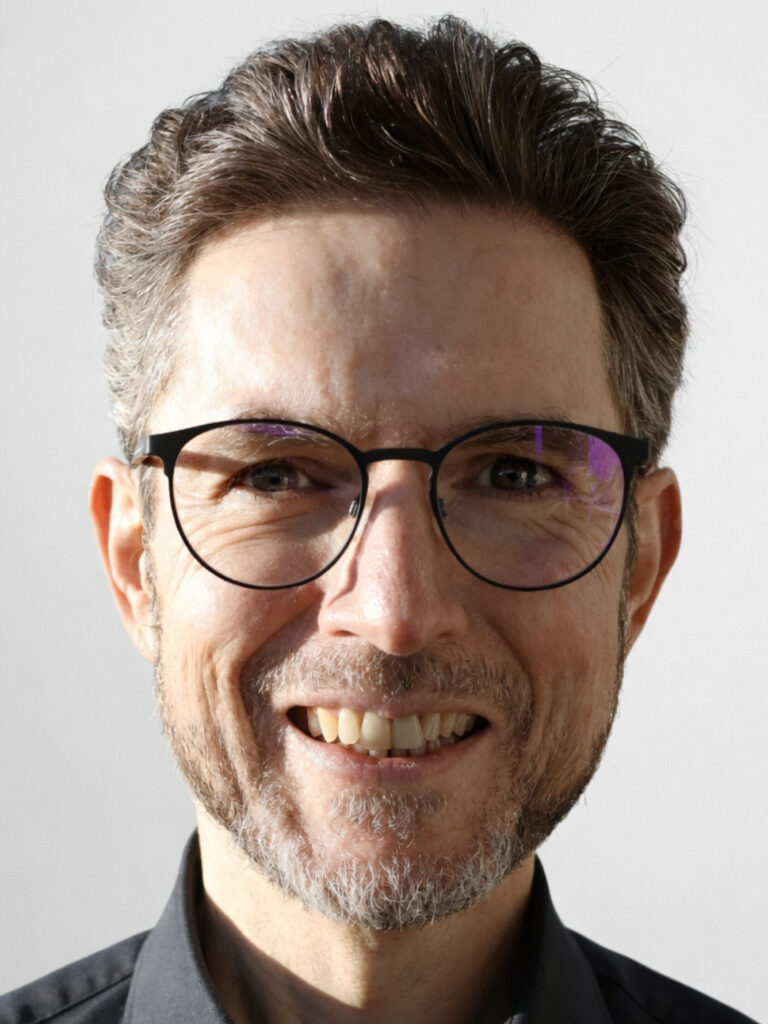
Pascal Fries is a Research Group Leader at the Max Planck Institute for Biological Cybernetics in Tübingen. He earned his PhD from Johann Wolfgang Goethe University, conducting research at the Max Planck Institute for Brain Research. After a postdoctoral fellowship at the National Institute of Mental Health, he was Principal Investigator at the Donders Centre, Radboud University. He later became a Scientific Member of the Max Planck Society and Managing Director of the Ernst Strüngmann Institute.
His research investigates how rhythmic neuronal synchronization enables selective communication between brain areas. He proposed the Communication-Through-Coherence hypothesis, positing that oscillatory alignment creates temporal windows that enhance information transfer during attention and perception. He also studies beta and theta rhythms in top-down and bottom-up cortical interactions across species.
Among his recognitions are a scholarship from the German National Academic Foundation, the “VIDI” Award from the Netherlands Organization for Scientific Research, the European Young Investigator (EURYI) Award, membership in The Young Academy of the Royal Netherlands Academy of Arts and Sciences, the Bernhard Katz Prize, and the Boehringer Ingelheim FENS Research Award.